Introduction
Great Northern beans are a versatile, mild-flavored legume known for their creamy texture and ability to absorb the flavors of whatever they’re cooked with. They are a staple ingredient in soups, stews, casseroles, and side dishes, offering both comfort and nourishment. Their subtle taste makes them ideal for a wide variety of cuisines, from rustic home cooking to refined dishes.
Origin
Great Northern beans are native to North America and are part of the common bean species (Phaseolus vulgaris). They were cultivated by Indigenous peoples long before European settlers arrived. Over time, they became a key component of American cuisine, especially in the Midwest and Northern regions, where they are still widely used today.
Cultural Significance
These beans have long been associated with hearty, home-style cooking. In the United States, they are often featured in traditional dishes like bean soups and baked beans. Their affordability and long shelf life have made them a reliable food source during difficult economic times. They also play a role in communal meals and gatherings, symbolizing warmth, simplicity, and sustenance.
Ingredients Quantity
2 cups dried Great Northern beans (or 3 cans, drained and rinsed)
6 cups water or broth
1 small onion, chopped
2 cloves garlic, minced
1 teaspoon salt (adjust to taste)
½ teaspoon black pepper
1 tablespoon olive oil or butter
Optional Additions
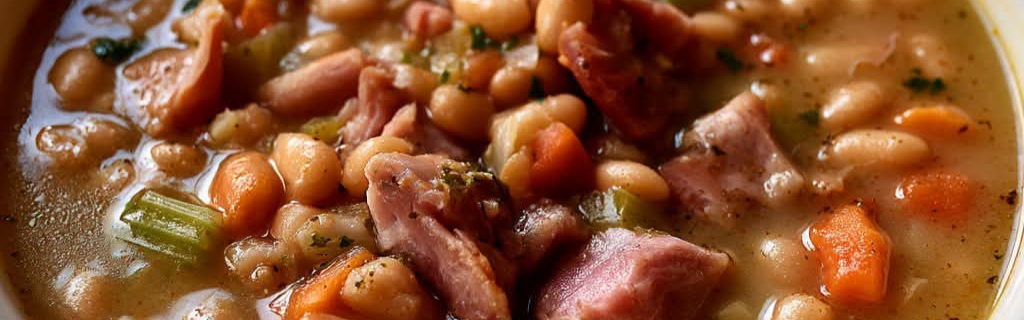
1 smoked ham hock or diced bacon for added flavor
2 carrots, sliced
2 celery stalks, chopped
Fresh herbs such as thyme, rosemary, or parsley
1 bay leaf
A splash of lemon juice or vinegar for brightness
Tips for Success
Soak dried beans overnight to reduce cooking time and improve digestibility.
Always simmer gently—rapid boiling can break the beans apart.
Add salt toward the end of cooking to prevent tough skins.
For deeper flavor, cook beans in broth instead of water.
Instructions
1. Rinse and sort the dried beans, removing any debris.
2. Soak beans overnight in water, then drain and rinse.
3. In a large pot, heat oil or butter over medium heat.
4. Sauté onion and garlic until fragrant and translucent.
5. Add beans and water or broth. Bring to a boil.
6. Reduce heat and let simmer for 1.5–2 hours, or until beans are tender.
7. Add salt, pepper, and any optional ingredients.
8. Continue cooking for another 20–30 minutes to blend flavors.
9. Adjust seasoning and serve warm.
Description
Cooked Great Northern beans are tender, creamy, and slightly nutty in flavor. They easily take on the taste of herbs, spices, and meats they are cooked with, making them highly adaptable. Their smooth texture makes them suitable for both chunky dishes and pureed recipes.
Nutritional Information (per 1 cup cooked beans, approx.)
Calories: 200
Protein: 14g
Carbohydrates: 37g
Fiber: 12g
Fat: 1g
Iron: 20% of daily value
Magnesium: 18% of daily value
Conclusion
Great Northern beans are a humble yet powerful ingredient that combines nutrition, affordability, and culinary flexibility. Whether used as a main dish or a side, they provide comfort and nourishment in every bite.
Recommendation
For best results, pair Great Northern beans with aromatic herbs and slow-cooked meats, or keep them vegetarian with a rich vegetable broth and fresh herbs. They also work wonderfully as a base for creamy dips or blended soups.
Embracing Healthful Indulgence
Enjoying Great Northern beans is a simple way to embrace wholesome eating without sacrificing flavor. Their rich texture and nutritional benefits make them an excellent choice for those seeking balanced, satisfying meals that nourish both body and soul.