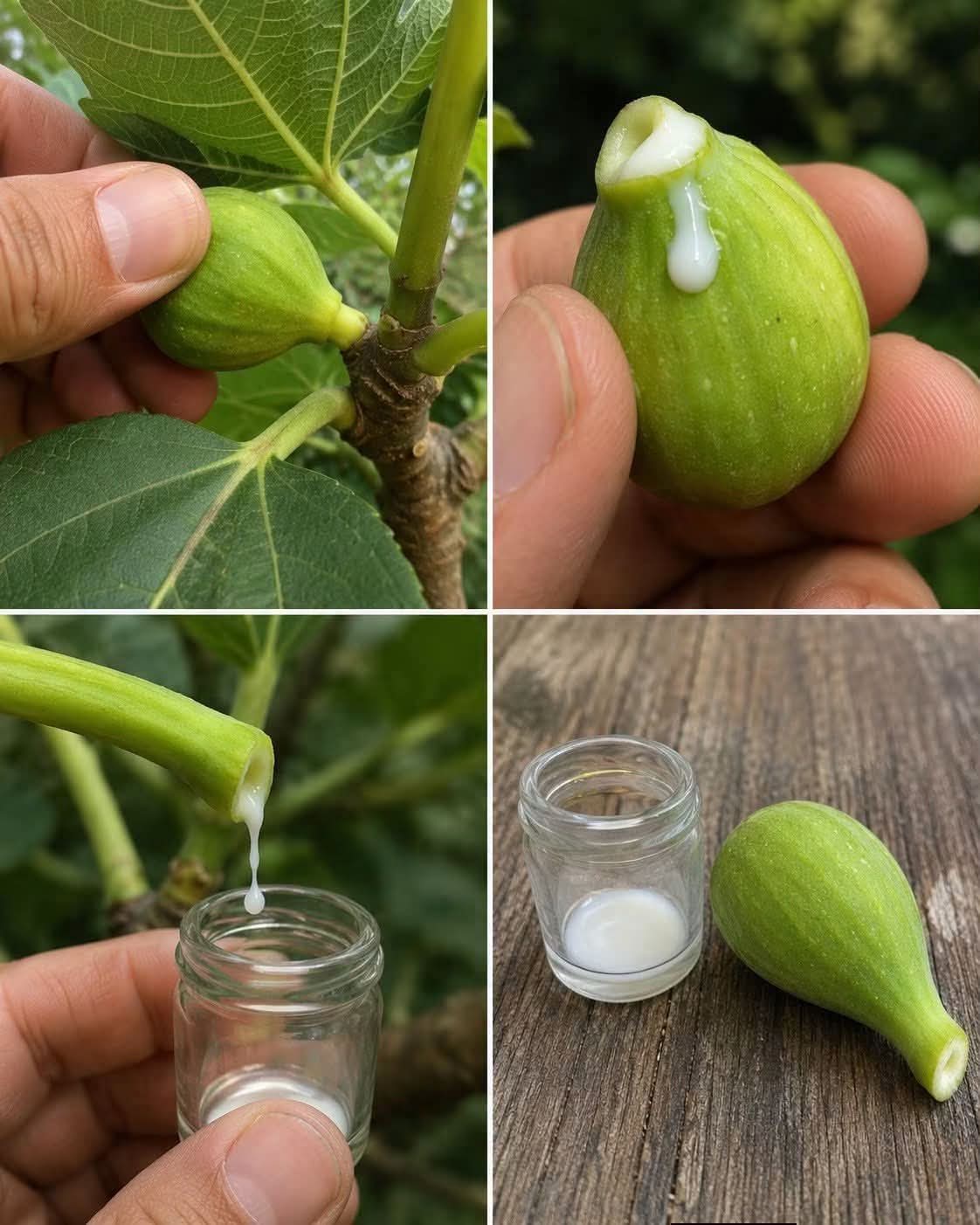
Have you ever noticed the milky white liquid that appears when a fresh fig stem or leaf is broken?
That substance is commonly called fig latex or fig sap, and it has a fascinating history in traditional cultures. 🌿
But before trying it yourself, there is something important to know: fig latex is not a proven cure for skin conditions, infections, cancer, diabetes, or other diseases, and the fresh latex can irritate the skin and eyes.
So today, let’s explore the history, traditional uses, preparation, and safety of this unusual part of the fig tree. 👇
🌿 WHAT IS FIG SAP?
Fig sap is the milky latex found inside parts of the fig tree, especially the stems and leaves.
When the plant is cut or broken, this white substance can appear.
It contains naturally occurring plant compounds that have attracted interest from traditional herbal practices and scientific researchers.
🛒 WHAT YOU NEED
For a simple traditional fig-and-herb drink, use:
- 2 fresh ripe figs
- 1 cup warm water
- A few fresh mint leaves
- A small squeeze of lemon
- Optional: cinnamon for flavor
⚠️ Do not add fresh fig latex/sap to this drink. The latex is not the same thing as the edible ripe fruit.
🍵 SIMPLE FIG DRINK
1️⃣ Wash the figs
Rinse the ripe figs thoroughly under clean running water.
Cut them into small pieces.
2️⃣ Add the water
Place the figs in a cup or small jug.
Add warm water and allow them to sit for several minutes.
3️⃣ Add flavor
Add a few mint leaves and a small squeeze of lemon.
For additional flavor, you can add a pinch of cinnamon.
4️⃣ Serve
Stir well and enjoy as a simple fruit-based drink.
No medicinal claims are necessary—the natural sweetness and flavor of the figs are enough. ❤️
🌳 HOW WAS FIG SAP USED TRADITIONALLY?
The fig tree has been cultivated for thousands of years and has an important place in Mediterranean and Middle Eastern food traditions.
Different parts of the tree—including the fruit, leaves, and latex—have appeared in traditional practices.
Historically, plant materials were often used according to local customs and knowledge passed from one generation to another.
However, traditional use is not the same as scientific proof of medical effectiveness.
🔬 WHAT MAKES FIG LATEX INTERESTING?
Researchers have studied compounds found in fig latex because plants can produce a wide variety of naturally occurring chemicals.
Fig latex contains enzymes and other compounds that are biologically active.
That makes it scientifically interesting—but laboratory findings should not automatically be interpreted as proof that applying fig sap to a person will treat a disease.
🌱 POSSIBLE BENEFITS OF THE FRUIT
The ripe fig itself is very different from the raw latex.
Figs can provide:
✨ Dietary fibre
✨ Natural carbohydrates
✨ Potassium
✨ Various vitamins and minerals
✨ Plant compounds
They can be enjoyed as part of a varied, balanced diet.
⚠️ IMPORTANT SAFETY INFORMATION
This part is especially important.
Fresh fig latex can cause skin irritation, and exposure to sunlight after contact with certain plant substances may increase the risk of a skin reaction.
Avoid getting fresh fig sap in your eyes.
Do not deliberately apply raw fig latex to broken or irritated skin.
Do not drink raw fig latex.
Children should not experiment with fresh fig sap.
If accidental exposure causes significant irritation, wash the affected area thoroughly with water and seek medical advice if symptoms persist or become severe.
🌿 FIG LEAVES AND THE FIG FRUIT
Don’t confuse the different parts of the plant.
🍈 Ripe fig: edible fruit commonly used fresh or dried.
🍃 Fig leaf: used in some culinary traditions for flavoring and wrapping foods.
🌱 Fig latex/sap: the milky substance released by the plant and should be handled cautiously.
Each part has different properties and shouldn’t automatically be treated as interchangeable.
🍯 HOW TO ENJOY FIGS SAFELY
Instead of experimenting with raw sap, try the edible fruit in everyday recipes.
🍓 FIG & YOGURT BOWL
Combine:
- Fresh sliced figs
- Plain yogurt
- A few walnuts
- Cinnamon
- Fresh mint
Mix gently and serve chilled.
It’s a simple way to enjoy the fruit without using the plant’s raw latex.
📜 A LITTLE HISTORY
Fig trees have been associated with Mediterranean and Middle Eastern civilizations for centuries.
The fruit was valued as a food because it could be eaten fresh or preserved by drying.
Like many plants used in traditional cultures, the fig tree also became associated with folk practices involving different parts of the plant.
These traditions are historically interesting and worth learning about, while modern health claims should still be evaluated using scientific evidence.
❤️ WHY FIGS ARE SO LOVED
Figs are naturally sweet, versatile, and easy to use.
You can enjoy them:
🍈 Fresh
🍯 Dried
🥣 With yogurt
🥗 In salads
🧀 With cheese
🍞 On toast
🍰 In desserts
🌿 FINAL THOUGHTS
The fig tree is much more fascinating than its delicious fruit alone.
Its leaves, stems, and natural latex have been part of traditional knowledge for generations, but “natural” does not automatically mean safe or medically effective.
The safest way to enjoy the fig is through its delicious edible fruit rather than experimenting with raw fig sap.
🌱 Nature is fascinating—but it deserves to be treated with knowledge and respect.
If you learned something new today, comment “🌱 FIG” below so I know you’re still here!
❤️ Thank you for supporting my recipes and traditional-food posts!
👇 SAVE THIS POST & SHARE IT WITH A FIG LOVER! 🍈❤️