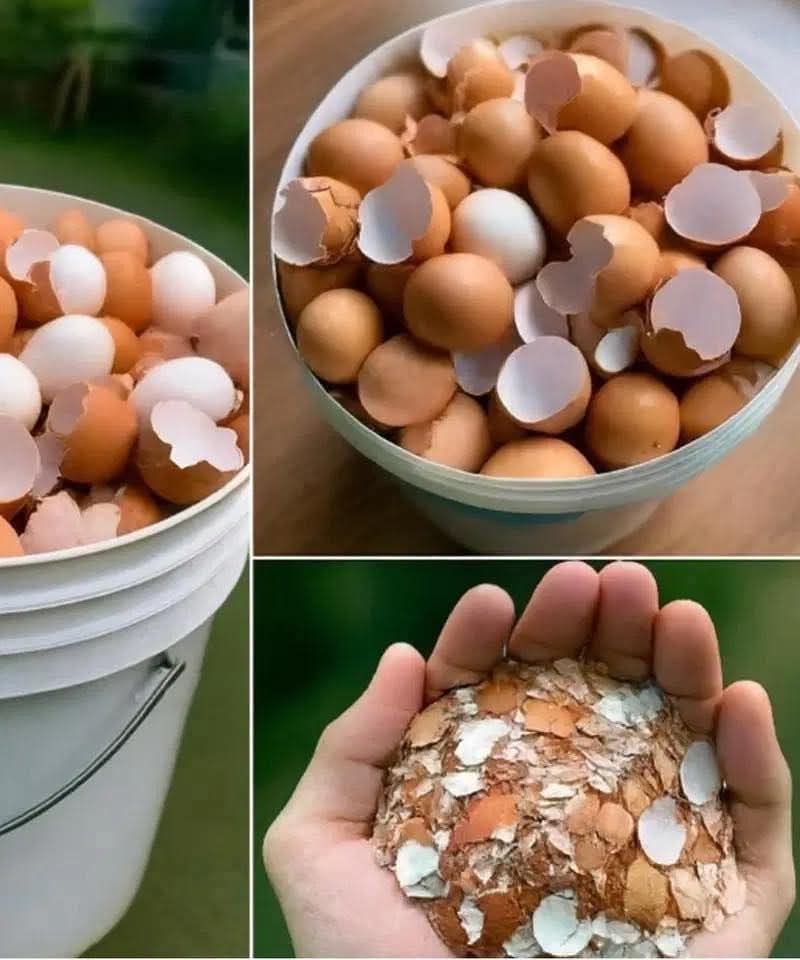
Eggshells are mostly made of calcium carbonate, which is why they’ve attracted interest as a possible source of calcium.
But there’s an important point: homemade eggshell preparations aren’t a proven treatment for osteoporosis, arthritis, high blood pressure, diabetes, or other diseases.
If you want to explore this traditional food-use idea, here’s a careful way to prepare eggshell powder for culinary experimentation.
🛒 INGREDIENT
- Clean eggshells from fresh eggs
That’s it! 🥚
👩🍳 PREPARATION
1️⃣ Save the shells
After using your eggs, rinse the shells thoroughly.
Remove as much egg residue and membrane as possible.
2️⃣ Boil
Place the cleaned shells in a saucepan of water.
Bring the water to a boil and continue boiling for several minutes.
This is a food-safety step, but it does not guarantee that a homemade eggshell product is completely free of contamination.
3️⃣ Dry completely
Remove the shells and allow them to dry thoroughly.
You can place them on a clean baking tray and dry them in a low oven until completely dry.
4️⃣ Grind
Once completely dry, crush the shells into very fine powder using a clean food processor or spice grinder.
Avoid breathing the fine powder.
5️⃣ Store
Place the powder in a clean, dry, airtight container.
Label it and keep it dry.
🥛 HOW PEOPLE TRADITIONALLY USE IT
Some traditional practices have involved finely powdered eggshell as a calcium-containing ingredient.
However, the amount of calcium in homemade powder can vary considerably, and it’s difficult to know the exact dose without proper testing.
For that reason, don’t take large amounts or use eggshell powder as a dietary supplement without discussing it with a doctor or pharmacist.
📜 A LITTLE HISTORY
Eggshells have long been reused in household and agricultural practices rather than simply discarded.
Because they contain a large amount of calcium carbonate, crushed eggshells have also been used in some traditional preparations and as a soil amendment.
Modern research has investigated eggshell-derived calcium, but research findings don’t automatically mean that a homemade preparation is appropriate or effective for treating a medical condition.
🌱 WHAT’S IN AN EGGSHELL?
The shell is primarily composed of calcium carbonate, along with smaller amounts of other minerals and organic components.
Calcium itself is an essential mineral involved in normal bone health, muscle function, and nerve signaling.
But getting enough calcium from a normal balanced diet is generally preferable to experimenting with unmeasured homemade supplements.
⚠️ IMPORTANT SAFETY NOTES
🚫 Don’t swallow large pieces of eggshell.
🚫 Don’t use eggshells that are dirty, moldy, cracked, or contaminated.
🚫 Don’t assume boiling makes every homemade preparation safe.
🚫 Don’t use eggshell powder to replace prescribed medication.
🚫 If you have kidney disease, a history of kidney stones, or take medications that affect calcium levels, speak with a healthcare professional before using calcium supplements or concentrated calcium products.
🥛 SAFER WAYS TO GET CALCIUM
Instead of relying on homemade eggshell powder, calcium can be obtained from foods such as:
🥛 Milk
🧀 Yogurt and cheese
🌱 Calcium-fortified plant beverages
🐟 Some fish eaten with edible bones
🥬 Certain leafy green vegetables
🫘 Calcium-fortified foods
❤️ FINAL THOUGHTS
Eggshells are an interesting example of how something normally considered kitchen waste can contain useful minerals.
But “natural” doesn’t automatically mean “medicine.”
Enjoy eggs as part of a balanced diet, and if you’re concerned about calcium or bone health, a healthcare professional can help determine whether you actually need additional calcium.
💬 Did you know eggshells contain mostly calcium carbonate?
Comment “🥚 YES” if you learned something new today!
❤️ Thank you for supporting my recipes and food posts!