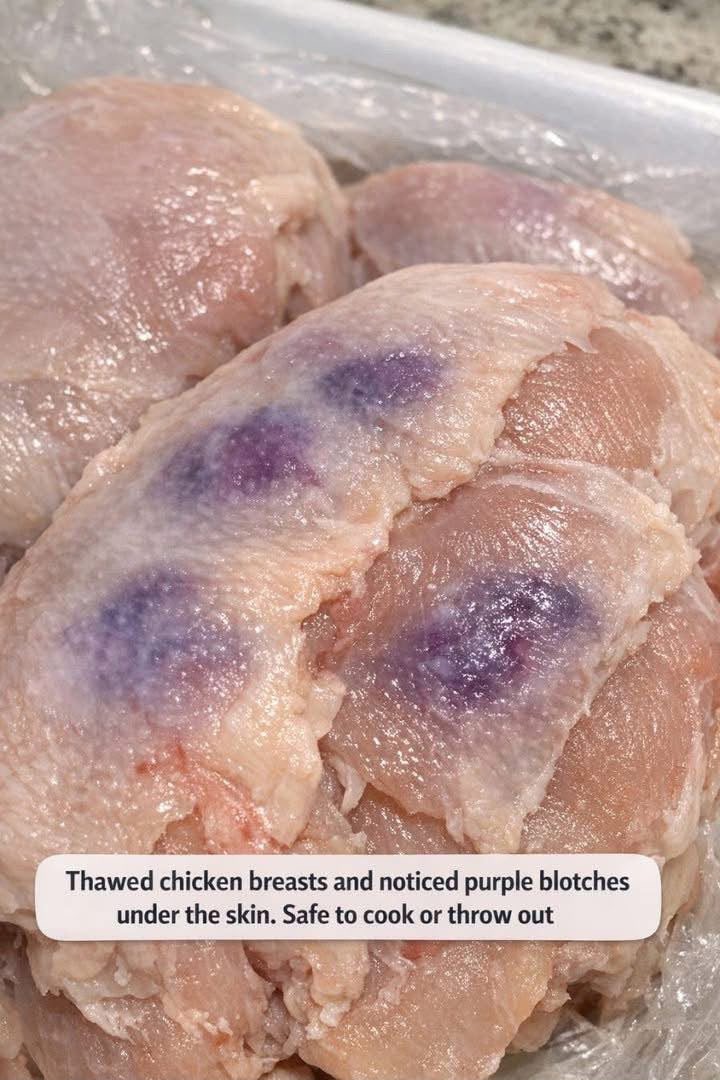
The purple areas can be related to bruising or normal pigment/blood-related color variation, particularly around areas under the skin. If the chicken was thawed safely in the refrigerator and otherwise looks and smells normal, you can generally cook it.
Throw it out instead if it has a distinctly foul/off smell, feels slimy or unusually sticky, or you aren’t confident it was kept properly refrigerated. Don’t taste raw chicken to test it.
If you cook it, chicken should reach 165°F (73.9°C) in the thickest part, measured with a food thermometer.
Also, don’t wash the chicken; USDA recommends against washing raw poultry because splashing can spread bacteria around your kitchen.
If you’d like, I can also give you a big recipe for those chicken breasts with the introduction, ingredients, instructions, methods, history, benefits, serving ideas, and conclusion in the style of your previous recipe posts.